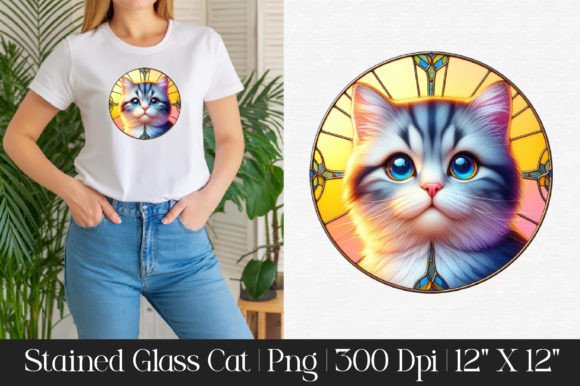
The Art and Technique of Stained Glass Cat Sublimation
When the timeless elegance of stained glass meets the precision of modern sublimation printing, a unique artistic category emerges: stained glass cat sublimation. This process transforms the luminous, segmented beauty of traditional stained glass into vibrant, durable prints on fabric, ceramics, metal, and other polyester-coated substrates. For cat lovers, artists, craft business owners, and interior designers, this technique offers a way to capture the graphic strength of leaded glass while taking advantage of sublimation’s color vibrancy and permanence.
Understanding the Core Process
Sublimation printing relies on heat and pressure to convert solid dye into gas, which then bonds permanently with a polymer surface. In a typical stained glass cat sublimation workflow, the artist first creates a digital design that mimics the structural lines, color zones, and light diffusion of stained glass. The image is printed onto transfer paper using sublimation inks. When pressed onto a pre-treated substrate, the ink embeds itself, resulting in a smooth, washable, and scratch-resistant image that retains the illusion of glass panes.
The crucial difference from standard sublimation lies in the design. A successful stained glass cat sublimation piece must balance the sharp, dark lines that represent the lead came with translucent, jewel-like color fills. Unlike a realistic cat photograph, this style demands stylized geometry—faceted ears, angular eyes, and segmented fur patterns that evoke the craftsmanship of a cathedral window.
Why Cat Themes Dominate This Niche
Cats have been a beloved subject in stained glass art for over a century, from Tiffany lamps to Victorian transoms. The natural shapes of a cat—their pointed ears, sweeping tail, and large luminous eyes—lend themselves perfectly to the angular segments of stained glass. When paired with sublimation, these designs gain an extra dimension of accessibility. A stained glass cat sublimation panel can be reproduced dozens of times with consistent color, making it viable for small-batch production without losing handcrafted appeal.
- Graphic simplicity: A cat’s silhouette works well within the constraints of stained glass panels.
- Symbolic resonance: Cats are associated with mystery, independence, and comfort—qualities that stained glass’s play of light amplifies.
- Market demand: Pet-themed home décor remains one of the fastest-growing segments in personalized gifts.
Practical Applications Across Media
One of the greatest strengths of stained glass cat sublimation is its versatility. Unlike actual stained glass, which is heavy, breakable, and expensive to ship, sublimated items are lightweight and durable. Here are the most common uses:
Home Décor Panels and Suncatchers
Fabric panels stretched over frames, acrylic sheets, or polycarbonate plaques become modern suncatchers. When backlit by natural or artificial light, the sublimated dyes simulate the translucency of glass. A stained glass cat sublimation suncatcher can hang in a window without the risk of shattering, while delivering the same atmospheric glow.
Wearable Art
Polyester garments—especially hoodies, T‑shirts, and tote bags—accept full‑coverage sublimation. A wrap‑around stained glass cat sublimation design on a hoodie creates a dramatic statement piece. Because the ink fuses with the fabric, the image does not crack, peel, or fade, even after repeated washing.
Ceramic and Metal Giftware
Mugs, coasters, and aluminum panels printed with stained glass cat sublimation patterns are popular in online shops. The glossy ceramic or metallic surface enhances the perceived depth of the design. Customers often purchase these as gifts for cat‑loving friends who appreciate art deco or artisan aesthetics.
Key Considerations for Creators
While the process is straightforward, achieving a convincing stained glass look requires deliberate design choices:
- Line work thickness: The “lead” lines should be at least 2‑3 pixels thick in digital files to mimic the substantial presence of metal came. Thin lines disappear or appear as cracks.
- Color saturation: Stained glass relies on saturated, jewel‑tone colors—emerald, ruby, cobalt, amber. Use high‑opacity sublimation inks to avoid washed‑out results.
- White underbase or substrate: For hard surfaces like metal or ceramic, a white coating is essential so the dye appears vivid. On fabric, white polyester yields the brightest effect.
- Pressure and temperature: Over‑pressing can cause the black lines to bleed into the color fills. Test prints are critical to find the balance between ink migration and sharp detail.
Artistic Variations and Styles
“Stained glass cat sublimation” is not a single look—it encompasses several aesthetic schools:
- Tiffany‑inspired: Curved, organic segments with intricate opalescent color gradients. Often based on Louis Comfort Tiffany’s floral and faunal motifs.
- Gothic revival: Strict geometric panels with pointed arches and deep, moody tones (dark purples, blood reds) suited for Halloween or medieval themes.
- Modern minimal: Fewer, larger panes with flat colors and bold black outlines. This style works best for contemporary interiors and younger audiences.
- Faux mosaic: Tiny irregular “tiles” that suggest a Byzantine mosaic rather than leaded glass. This variation often uses high‑detail sublimation on fabric for a pixelated effect.
Artists can blend these styles. For example, a stained glass cat sublimation design might have a Tiffany‑style face with a minimalist body, creating a visually striking hybrid that appeals to both traditional and modern tastes.
Tools and Workflow for Hobbyists and Business Owners
Entering this niche does not require a heavy investment, but some tools are non‑negotiable:
- Vector or raster design software (Illustrator, Procreate, or Affinity Designer) with layer support for line work and fills.
- A sublimation printer (Sawgrass, Epson F-series, or conversion systems) paired with dedicated sublimation inks.
- A heat press capable of reaching 400°F (204°C) with even pressure distribution.
- Polyester‑coated substrates or pretreated blanks.
A common starting point is to practice on polyester fabric squares before moving to hard goods. The forgiving nature of fabric allows the creator to experiment with line thickness and color blending without wasting expensive mugs or tile blanks. Over time, a creator can develop a catalog of stained glass cat sublimation designs that form a cohesive brand identity.
Observations on Durability and Longevity
One of the advantages that creators and consumers appreciate is the archival quality of sublimated stained glass art. The dye‑sub process penetrates the surface, so there is no top coating to scratch or peel. A stained glass cat sublimation tile placed outdoors under a covered patio can retain its colors for several years if the substrate itself is UV‑resistant. However, direct sunlight on non‑UV‑protected materials will cause fading over time. For suncatchers, a UV‑protective laminate or acrylic sheet is recommended.
Another consideration is the tactile feel. Unlike real stained glass, sublimated pieces are smooth and cool to the touch—they lack the relief of lead came. Some artists compensate by adding resin or epoxy layers to create a physical texture that simulates the metal lines. This hybrid approach merges digital sublimation with handcrafted finishing, appealing to collectors who prize both modern efficiency and traditional texture.
Community and Market Trends
The rise of print‑on‑demand (POD) platforms has accelerated the spread of stained glass cat sublimation. Independent artists upload their designs to sites like Redbubble, Society6, or their own Shopify stores, offering dozens of product variations from a single artwork. Social media groups dedicated to “sublimation cats” or “digital stained glass” share tips on color palettes, printing techniques, and packaging. Educators in graphic design courses sometimes use this specific motif as a capstone project because it demands mastery of line, color theory, and surface transfer.
From a business perspective, stained glass cat sublimation items command a premium over generic pet‑themed merchandise. Customers perceive them as artistic rather than novelty, which justifies a price point 20–30% higher than standard sublimated products. The strongest sales occur during holiday seasons—Christmas, Mother’s Day, and Halloween—when gift‑seekers look for items that feel personal and handcrafted.
Environmental and Safety Considerations
Sublimation is a water‑free printing process, making it more eco‑friendly than many dye‑based or screen‑printing alternatives in terms of waste water. However, the inks are synthetic and the substrates are typically plastic‑based. Creators who emphasize sustainability can source recycled polyester fabrics and biodegradable transfer papers. A stained glass cat sublimation piece produced on a recycled PET panel communicates eco‑consciousness while retaining the visual punch of traditional stained glass.
For consumers, safety is rarely a concern because the ink is embedded and non‑toxic once set. Heat‑pressed items do not release fumes when used correctly, though proper ventilation during pressing is advisable. Parents often feel confident allowing cats and stained glass cat sublimation mugs into kitchens and children’s rooms because there is no glass to break.
Expanding into Collaborative Projects
Some artists collaborate with stained glass artisans to create hybrid pieces: a sublimated design is printed on a flexible film and then laminated between real glass panes, combining digital color with physical lead lines. This elevated product sits at the intersection of print and glass art, and it sells for a considerably higher price. While not pure sublimation, these collaborations demonstrate the flexibility of stained glass cat sublimation as a creative starting point rather than an endpoint.
Similarly, interior designers use large‑format sublimated panels to replicate stained glass windows in buildings where installing real stained glass is impractical—rental apartments, corporate offices, and historic preservation districts. A bespoke stained glass cat sublimation film applied to an existing window provides the aesthetic without permanent alteration.
Final Practical Takeaways
Whether you are a hobbyist designing a single cat portrait for your home or a business owner building a collection of animal‑themed housewares, the intersection of stained glass aesthetics and sublimation technology opens a rich creative vein. Focus on line integrity, color saturation, and substrate choice. Study the traditional stained glass masters—Tiffany, Burne‑Jones, La Farge—and translate their principles into digital layers. The result will resonate with an audience that values craftsmanship, feline charm, and the warm interplay of light and color.
Experiment with different substrate materials, from soft polyester fleece to rigid aluminum composite. Each surface changes the way light interacts with the stained glass cat sublimation design. Document your tests and share them; the community thrives on shared knowledge. As the technique matures, it continues to blur the line between print and craft, making timeless art accessible to everyone.